

The Jews and Their Historical Persecution
The persistence of antisemitic terrorism is not a mystery; it is a policy failure. Governments that proudly cite Jewish contributions to science, culture, and democracy have proven far less willing to defend Jewish lives with the same urgency. When synagogues require
barricades and soldiers while politicians issue statements, something fundamental has broken.
History does not merely record events; it exposes patterns. Few histories reveal those patterns more starkly than that of the Jewish people. Across more than three millennia,
Jewish existence has unfolded as a paradox extraordinary cultural continuity alongside
relentless persecution, intellectual flourishing shadowed by systematic attempts at erasure. To examine Jewish persecution is not only to recount Jewish suffering; it is to hold a mirror to humanity’s repeated moral collapse.
The Jewish story forces an uncomfortable question upon every age: Why does civilisation, again and again, turn against those who refuse to disappear?
A People Marked by Difference — and Made Vulnerable by It
The Jewish people emerged in the ancient Levant as a community bound not merely by blood or territory, but by an idea: ethical monotheism, codified law, and collective responsibility. Long before nationalism or modern states, Judaism insisted that morality was universal and power answerable to law. This insistence would later unsettle empires, churches, and ideologies alike.
From the Babylonian exile onward, Jews learned to survive without sovereignty. Faith replaced land; study replaced armies. The synagogue, the school, and the text became portable homelands. This adaptability ensured survival but it also marked Jews as
permanent outsiders wherever they lived.
Difference, tolerated in times of stability, became dangerous in times of crisis.
From Exile to Scapegoat: Ancient and Medieval Foundations of Hatred
Early persecution under Assyrian, Babylonian, and Roman rule was rooted in imperial domination. But something darker emerged in the medieval world: the moralisation of hatred.
In Christian Europe, Jews were transformed into theological villains. Accused of collective guilt for the death of Jesus, they became convenient embodiments of evil. This belief endorsed from pulpits and enforced by kings licensed centuries of violence. Blood libel myths accused Jews of murdering Christian children. Host desecration trials fabricated
crimes to justify executions. Crusaders slaughtered Jewish communities en route to the Holy Land, believing massacre to be an act of piety.
The Black Death revealed the deadly efficiency of scapegoating. As plague ravaged Europe, Jews were accused of poisoning wells. Entire communities were burned alive not despite the absence of evidence, but because evidence was irrelevant. Fear had found its victim.
Expulsions followed a grim rhythm: England in 1290, France repeatedly, Spain in 1492.
Conversion or exile became state policy. In Spain, centuries of Jewish life were erased
overnight, scattering Sephardic Jews across the Ottoman world, North Africa, and Europe.
Under Islamic rule, Jews were not demonised in the same theological manner, but they lived under conditional tolerance. As dhimmis, they were protected yet subordinate safe only so long as political winds did not change. History shows they often did.
Modernity’s Broken Promise: Emancipation and Backlash
The Enlightenment promised equality. Jews were emancipated, granted citizenship, and invited into public life. But acceptance came with conditions: assimilation without memory, participation without difference.
When Jews succeeded academically, economically, culturally, they were accused of manipulation. When they struggled, they were blamed for parasitism. Antisemitism adapted to modernity, shedding religious language and adopting racial pseudoscience. Jews were no longer condemned for belief, but for birth.
In Eastern Europe and Tsarist Russia, pogroms erupted with terrifying regularity. Authorities looked away or quietly encouraged violence. Millions fled westward, carrying with them
trauma and resilience.
The lie that Jews were secretly powerful, disloyal, and corrupting society hardened into conspiracy. The infamous Protocols of the Elders of Zion, a proven forgery, spread across continents, poisoning minds long before the internet amplified falsehoods.
The Holocaust: When Law Became a Weapon
The Holocaust was not an eruption of madness. It was the logical end of centuries of normalised hatred.
Nazi Germany transformed antisemitism into policy. Laws stripped Jews of citizenship. Courts enforced racial definitions. Bureaucrats scheduled deportations. Engineers designed camps. Doctors conducted selections. The genocide of six million Jews was not chaos; it was administration.
The world watched too long. Borders closed. Refugees were turned away. Silence became complicity.
The Holocaust shattered European Jewry and forced humanity to confront an unbearable truth: civilisation can commit genocide without abandoning its institutions, only its conscience.
After Auschwitz: A Hatred That Refused to Die
The end of World War II did not end Jewish persecution. In Arab and Muslim-majority
countries, ancient Jewish communities were uprooted amid rising hostility after the creation of Israel. Nearly a million Jews fled or were expelled, an exodus often erased from popular memory.
In the Soviet Union, antisemitism resurfaced as “anti-Zionism.” Jews were purged, surveilled, and accused of dual loyalty. In the West, antisemitism retreated underground, resurfacing during moments of economic or political anxiety.
Today, it wears new masks. Old myths circulate online at unprecedented speed. Jews are
blamed for global finance, pandemics, wars. Attacks on synagogues and Jewish communities remind us that history is not distant; it is dormant.
Criticism of Israeli policy is legitimate; collective blame of Jews is not. When Jewish identity itself becomes suspect, history’s warning sirens should be deafening.
Why This History Still Matters
Jewish persecution is not unique in suffering but it is unique in consistency. It shows how prejudice evolves, how law can legitimise cruelty, how educated societies rationalise exclusion.
It also demonstrates something else: resilience without erasure. Despite everything exile, expulsion, genocide Jewish culture survived. Learning continued. Memory endured.
Contribution flourished.
This survival is not accidental. It is the result of a moral refusal to disappear.
A Test for Every Generation
The history of Jewish persecution is not only Jewish history. It is human history at its most revealing.
It shows how quickly difference becomes danger. How easily fear becomes policy.
How often silence becomes violence.
Remembering this history is not an act of sympathy it is an act of responsibility. Because antisemitism, like all hatreds, does not announce itself fully formed. It grows slowly, disguised as reason, cloaked in ideology, justified by crisis.
The Jewish experience teaches a hard lesson: the health of a society can be measured by how it treats those who stand apart.
To study this history is to ask ourselves not whether such persecution happened, but whether we are doing enough to ensure it never happens again.
And history, relentless in its honesty, reminds us that the answer is never guaranteed.
Adolf Hitler, Antisemitism, and the Machinery of Jewish Persecution
How Hatred Was Normalised, Weaponised, and Turned Into Genocide
History does not often produce evil in a single, monstrous burst. More often, it manufactures it slowly through ideas repeated until they sound reasonable, through laws passed in the
name of order, and through silence disguised as neutrality. Adolf Hitler’s persecution of Jews, culminating in the Holocaust, was not the result of a momentary madness or a
spontaneous eruption of cruelty. It was the outcome of a long, deliberate process in which prejudice was refined into ideology, ideology into policy, and policy into mass murder.
To understand Hitler’s antisemitism is not to excuse it. It is to confront how a modern, educated society became an accomplice to history’s most systematic genocide and how the same mechanisms can resurface wherever hatred is allowed to masquerade as truth.
Phase Three: Industrialised Murder
Under the cover of World War II, Hitler authorised the “Final Solution.” This was genocide planned with bureaucratic precision. Trains ran on schedules. Camps were engineered for efficiency. Death was managed like production.
Six million Jews were murdered not in chaos, but in order.
Power, Profit, and Political Utility
Antisemitism was not only ideological it was useful.
It unified Germans through shared hatred. It distracted from economic hardship and military failures. It justified authoritarian control. And it generated enormous wealth through the confiscation of Jewish property.
Homes, businesses, gold, art everything was seized. Genocide was accompanied by theft on a continental scale. Hatred filled the state’s coffers even as it emptied Europe of Jews.
This is one of history’s most uncomfortable truths: mass murder was not just tolerated it was incentivised.
The Most Disturbing Reality: Ordinary Participation
The Holocaust was not carried out by monsters alone. It depended on ordinary people.
Clerks stamped documents. Engineers built railways. Doctors selected victims. Neighbours remained silent. Collaborator regimes assisted eagerly.
Most perpetrators were not driven by sadism, but by obedience, careerism, or indifference. This is why the Holocaust terrifies historians, not because it was unique, but because it was possible.
Genocide does not require universal hatred. It requires enough compliance.
Aftermath: A World Forever Altered
By 1945, European Jewry had been nearly annihilated. Entire cultures vanished. Survivors carried trauma that no victory could erase. The Holocaust reshaped global law, ethics, and politics and led directly to the creation of the State of Israel.
Yet antisemitism did not die with Hitler. It mutated. It found new disguises, new languages, new platforms.
Hatred rarely disappears. It waits.
Why This History Cannot Be Treated as Closed
The lesson of Hitler’s antisemitism is not confined to Germany or the past. It reveals how quickly societies can slide from prejudice into persecution when lies are repeated, minorities are scapegoated, and moral responsibility is outsourced.
Genocide does not begin with killing.
With exclusion.
With silence.
Conclusion: Hitler Was the Architect — but Society Laid the Foundation
Adolf Hitler was the face of the Holocaust, but he was not its sole cause. The genocide of Jews was enabled by centuries of prejudice, institutional cowardice, and collective moral failure.
The most enduring warning of this history is not about one dictator it is about what happens when hatred is normalised and humanity is negotiable.
Remembering the Holocaust is not an act of ritual. It is an act of vigilance.
Because the danger was never only Hitler.
The danger was the world that allowed him to turn hatred into law and law into death.
Mossad: Israel’s Shadow Arsenal and the Burden of Power
Few intelligence agencies evoke as much fascination, fear, and controversy as Israel’s Mossad. To its admirers, Mossad is a masterclass in precision—an organization that compensates for Israel’s geographic vulnerability and demographic limits through
intelligence, ingenuity, and audacity. To its critics, it is an emblem of unchecked power an
agency willing to bend laws, violate sovereignty, and normalize assassination in the name of national survival.
Both views are incomplete on their own. Together, they form the uncomfortable truth:
Mossad is not merely an intelligence agency; it is a product of existential anxiety, historical
trauma, and a political doctrine that believes survival sometimes demands operating beyond the margins of conventional morality.
To understand Mossad is to confront a fundamental question of modern geopolitics: How far can a state go in defending itself before defense becomes domination?
Born from Fear, Forged by Necessity
Mossad was formally established in 1949, barely a year after the birth of the State of Israel. The timing was not coincidental. Israel emerged into a hostile regional environment, surrounded by adversaries who rejected its very existence. For a nation with no strategic depth and a population still reeling from the Holocaust, intelligence was not a luxury it was oxygen.
David Ben-Gurion, Israel’s founding prime minister, understood this reality with brutal clarity.
He unified fragmented intelligence units into a single organization tasked with foreign
intelligence, covert operations, and the protection of Jewish lives beyond Israel’s borders. Mossad would not be bound by conventional rules because Israel itself, in Ben-Gurion’s view, existed in a state of permanent exception.
This origin story matters. Mossad was never designed to be reactive. It was built to anticipate, preempt, and neutralize threats before they materialized often far from Israeli territory.
The Mossad Doctrine: Intelligence as a Weapon
Unlike many intelligence agencies that prioritize analysis and diplomacy, Mossad has historically emphasized action. Human intelligence (HUMINT), deep-cover infiltration, targeted killings, sabotage, and psychological warfare form the core of its operational philosophy.
This approach reflects a deeply ingrained belief:
“If Israel waits for threats to arrive at its borders, it will be too late.”
Mossad officers known as katsas are trained to operate with extreme autonomy. They
recruit assets, plan missions, and execute operations with minimal bureaucratic friction. This operational freedom has produced some of the most audacious intelligence feats of the modern era—and some of its most troubling controversies.
Triumphs That Built the Myth
Mossad’s reputation was cemented by operations that read like fiction but reshaped history.
The Eichmann Capture (1960)
Perhaps Mossad’s most morally unambiguous operation was the capture of Adolf Eichmann, a principal architect of the Holocaust, from Argentina. Smuggled to Israel and put on trial,
Eichmann’s capture was not merely an intelligence coup it was an act of historical reckoning.
For Holocaust survivors, it signaled that justice could reach even the most distant refuge. For Mossad, it established a precedent: time and borders do not erase accountability.
The Long Shadow After Munich
Following the 1972 Munich Olympics massacre, Mossad launched Operation Wrath of God, a years-long campaign targeting those responsible. The message was unmistakable: attacks on Israelis would carry consequences anywhere in the world.
Supporters saw deterrence. Critics saw vigilantism. What is undeniable is that Mossad normalized a model of counterterrorism that many states would later emulate quietly, and often without public acknowledgment.
Strategic Espionage and Iran
From cyber operations like Stuxnet to the theft of Iran’s nuclear archives in 2018, Mossad has demonstrated an ability to blend old-school espionage with cutting-edge technology. These operations delayed adversarial programs without open warfare, reinforcing Mossad’s image as Israel’s first and most decisive line of defense.
Failures, Miscalculations, and Moral Costs
For all its successes, Mossad’s history is also marked by error and hubris.
The Lillehammer Affair (1973)
In Norway, Mossad agents mistakenly assassinated an innocent man, believing him to be a Palestinian militant. The fallout was severe: arrests, diplomatic embarrassment, and a rare moment when Mossad’s invisibility failed.
Intelligence Blind Spots
The 1973 Yom Kippur War exposed catastrophic intelligence failures, as did more recent attacks that caught Israel unprepared. These moments remind us that even elite agencies can fall victim to confirmation bias and overconfidence.
The Ethics of Assassination
Targeted killings remain Mossad’s most controversial tool. While Israel argues these actions prevent larger bloodshed, critics contend they erode international law and normalize
extrajudicial violence.
The question persists:
Does eliminating one threat today create ten more tomorrow?
Power Without Transparency
Mossad operates under intense secrecy, reporting directly to the Prime Minister. This
structure enables swift action—but limits oversight. Unlike military operations, Mossad’s missions rarely face parliamentary scrutiny or public debate.
This lack of transparency fuels mistrust abroad and raises democratic concerns at home. An agency designed to protect the state can, if unchecked, distort the values it claims to defend.
Global Influence and the Shadow It Casts
Mossad’s methods have reshaped global intelligence norms. Targeted killings, cyber sabotage, and covert disruption are now standard tools in statecraft. What was once exceptional has become routine.
Yet Mossad’s influence extends beyond tactics. It embodies a worldview where security justifies extraordinary measures, and where survival is framed as a perpetual emergency.
This worldview resonates in a world increasingly defined by asymmetric warfare but it also risks perpetuating endless cycles of retaliation.
Conclusion: The Price of Being Unseen
Mossad is neither a villain nor a legend. It is an institution forged in fear, sharpened by necessity, and sustained by a belief that Israel cannot afford innocence.
Its achievements are undeniable. Its excesses are equally real.
The true challenge facing Mossad and the state it serves is not operational capability, but moral clarity. Intelligence agencies do not operate in a vacuum; they shape the ethical boundaries of the societies that empower them.
In the end, Mossad’s greatest test is not whether it can outmaneuver enemies in the shadows but whether a democracy can wield such power without losing sight of the light.
Because when secrecy becomes habit and exceptionalism becomes doctrine, the line between defense and domination grows dangerously thin.
October 7, 2023: The Day the Illusion of Stability Shattered
A Refined, Original, and Editorial Analysis
October 7, 2023, was not simply another eruption in a long-running conflict. It was a rupture psychological, strategic, and moral that exposed how fragile assumptions of deterrence,
intelligence superiority, and containment had become in the Israeli–Palestinian theatre. In a single morning, Hamas shattered Israel’s sense of invulnerability, detonated a regional crisis, and plunged Gaza and Israel into one of the most destructive chapters of their shared history.
The attack branded by Hamas as Operation Al-Aqsa Flood was unprecedented in scale, coordination, and brutality. It was also devastatingly effective at achieving its immediate
aim: shock. But shock is not strategy, and the aftershocks of that day continue to reshape the Middle East in ways Hamas itself may not have fully anticipated.
The Anatomy of a Shock Attack
What distinguished October 7 was not merely violence, but method. Hamas combined rocket barrages with ground infiltrations, airborne incursions, and maritime landings overwhelming Israeli defenses designed to stop precisely such scenarios. Border fences, surveillance systems, and rapid-response units failed almost simultaneously.
The result was chaos across southern Israel: military bases overrun, kibbutzim invaded,
civilians hunted, and a music festival transformed into a killing ground. Hostage-taking men, women, children, elderly became a central tactic, intended to extract leverage and freeze
Israel’s response.
This was not spontaneous rage. It was a meticulously planned operation years in the making, exploiting Israeli complacency, intelligence blind spots, and political distraction. Hamas
understood that the most powerful weapon was not the rocket, but surprise.
Terrorism or “Resistance”? The Moral Line That Was Crossed
Language matters, and October 7 forced the world to confront uncomfortable truths. No political grievance real or perceived can justify the deliberate targeting of civilians. The mass killing, abductions, sexual violence, and desecration documented that day place the attack squarely within the definition of terrorism under international law.
Attempts by some actors to frame the assault as “resistance” collapsed under the weight of evidence. Resistance targets military occupation; terrorism targets human beings to instill fear. October 7 was the latter.
This distinction is not semantic. It determines whether the world responds with accountability or moral relativism.
Intelligence Failure and the Price of Arrogance
For Israel, the attack exposed one of the gravest intelligence failures in its history. Warnings some explicit were reportedly discounted. Hamas was viewed as deterred, economically dependent, and strategically cautious. Gaza was “contained.”
That assumption proved fatal.
Like the 1973 Yom Kippur War, October 7 revealed how success breeds blindness. Israel’s technological superiority fostered a belief that human intent could be fully monitored, predicted, and controlled. Hamas exploited that belief, operating below the threshold of detection until it was too late.
Security systems failed not because they were weak but because they were trusted too much.
Hamas’s Calculation: Victory Through Catastrophe
From Hamas’s perspective, the attack was meant to reorder the conflict. By provoking an overwhelming Israeli response, Hamas sought to:
Re-center the Palestinian issue globally
Undermine Arab–Israeli normalization
Radicalize the region
Reassert itself over rival Palestinian factions
In the short term, it succeeded in drawing global attention. In the long term, it unleashed devastation on Gaza of historic proportions raising a brutal question: was the suffering of Gaza’s civilians a cost Hamas was willing, even eager, to impose?
The answer appears tragically clear.
Israel’s Response: Security, Trauma, and the Ethics of War
Israel’s retaliation was swift, massive, and uncompromising. Declaring war, it launched sustained air and ground operations in Gaza aimed at dismantling Hamas’s military and governance structures.
Yet the scale of destruction tens of thousands dead, vast displacement, and humanitarian collapse sparked global outrage and legal scrutiny. Allegations of war crimes, collective punishment, and disproportionate force dominate international discourse.
Israel insists it is fighting an enemy embedded among civilians. Critics argue that military necessity does not erase civilian suffering. Both claims can coexist and that is the moral tragedy of modern asymmetric warfare.
The Global Ripple Effect
October 7 did not stay confined to Israel and Gaza.
Antisemitism surged worldwide, often disguised as political protest
Islamophobia rose in parallel
Campuses, parliaments, and streets became ideological battlegrounds
Regional tensions escalated from Hezbollah in the north to Iran’s shadow involvement
The attack fractured global consensus and deepened polarization, forcing societies to confront how easily outrage turns into hatred.
What October 7 Ultimately Revealed
October 7 exposed uncomfortable realities:
That containment without resolution is an illusion
That intelligence superiority cannot replace political foresight
That extremist violence feeds on despair but multiplies it
That civilian lives remain expendable to ideologues on all sides
Most of all, it revealed the cost of postponing peace while normalizing conflict.
Conclusion: A Day That Will Not End
October 7, 2023, will not be remembered merely as a massacre or a military failure. It will be remembered as the moment when the status quo collapsed violently, irreversibly.
For Israel, it shattered the myth of absolute security.
For Palestinians, it unleashed a catastrophe whose scars will last generations.
For the world, it reaffirmed a painful truth: unresolved injustice does not fade it explodes.
There are no winners in what followed that day. Only graves, ruins, and unanswered questions.
If October 7 teaches anything, it is this:
when politics fails, civilians pay and extremism thrives in the wreckage.
History will judge not only those who pulled the triggers, but those who allowed despair, hatred, and denial to become policy.
The Reported Bondi Beach Hanukkah Attack (2025):
Antisemitic Violence, Terror Narratives, and the Fragility of Public Safety
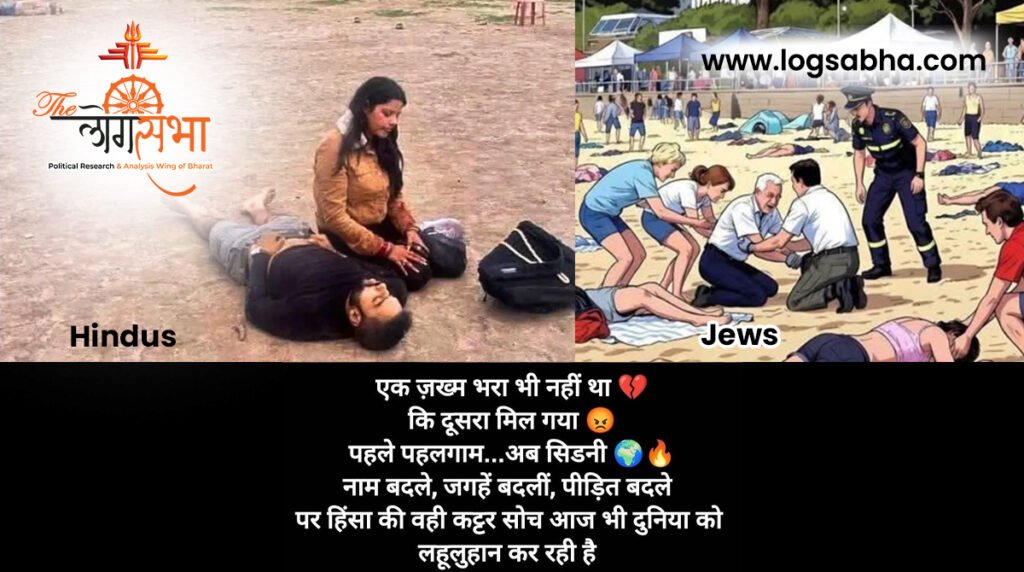
Reports emerging in December 2025 of a deadly attack during a Hanukkah gathering at Sydney’s Bondi Beach sent shockwaves through Jewish communities across Australia and far beyond. Even as official investigations continue and key details remain subject to confirmation, the gravity of what has been reported an alleged act of ideologically motivated violence targeting a Jewish religious celebration has already reshaped public discourse around antisemitism, terrorism, and the vulnerability of open civic spaces.
According to preliminary accounts circulated by media outlets, eyewitnesses, and community organisations, a peaceful Hanukkah event was abruptly transformed into a scene of terror. If these reports are substantiated, the attack would represent one of the most severe acts of antisemitic violence in Australia’s modern history. More broadly, it would underscore a deeply troubling global trend: Jewish identity itself has increasingly become a target in an age where extremist ideologies, amplified by digital radicalisation, bleed into everyday civilian life.
Even before all facts are firmly established, the incident has assumed powerful symbolic weight. It has reignited fears long held within Jewish communities that public visibility, cultural openness, and religious expression now carry heightened and unpredictable risks.
A Festival of Light Turned into a Scene of Fear
Hanukkah is among the most publicly celebrated Jewish festivals. It commemorates survival against oppression, the refusal to abandon identity under coercion, and the enduring belief that light—however fragile—can overcome darkness. Public candle-lighting ceremonies, particularly those organised by Chabad-Lubavitch communities, are intentionally open and inclusive. They are designed not as closed religious rites, but as expressions of shared civic belonging.
That openness is also their vulnerability.
According to early reports, the Bondi Beach event drew families, children, elderly participants, and visitors—many of whom were attending not out of religious obligation, but curiosity, solidarity, or community spirit. When violence allegedly erupted, celebration turned instantly into chaos. Panic replaced prayer. A site meant for joy and remembrance became one of fear, confusion, and loss.
Witness accounts have spoken of indiscriminate violence and desperate attempts by civilians to assist one another before emergency services arrived. Whether every reported detail ultimately withstands investigative scrutiny or not, the core reality remains: a Jewish religious observance was allegedly targeted not because of any provocation, but because of what it symbolised.
Victims Beyond Numbers
In the immediate aftermath of mass violence, casualty figures often dominate headlines. Yet numbers alone cannot convey the depth of human loss.
Initial reports suggested that victims spanned generations, including children and elderly community members. One widely circulated account spoke of a Holocaust survivor among the dead a detail that, if verified, would carry devastating historical resonance. A life once spared from genocidal hatred would have been extinguished decades later by its ideological descendants, on a beach in a country long considered a refuge from such horrors.
Even as investigations refine the facts, the human cost is already undeniable. Each victim represents not only a life lost, but a rupture in family histories, communal memory, and collective security. The trauma inflicted does not end with those physically present. It radiates outward—through families, synagogues, schools, and diasporic communities who now gather under a renewed shadow of fear.
Terrorism, Antisemitism, and the Question of Motive
Australian authorities reportedly characterised the attack as a suspected act of terrorism, citing ideological motivations linked to extremist narratives circulating online. While no verified claim of responsibility has emerged, investigators indicated that the alleged perpetrator may have been inspired by transnational jihadist ideology rather than acting under direct organisational command.
This distinction is critical.
Modern terrorism increasingly functions through decentralised radicalisation. Individuals consume propaganda, conspiracy theories, and grievance narratives through digital ecosystems that reward outrage and dehumanisation. In such frameworks, antisemitism is not incidental it is foundational. Jewish communities are framed as symbolic enemies, avatars of imagined global conspiracies, or proxies for distant geopolitical conflicts.
The timing of the reported attack during Hanukkah only intensifies concerns that the motive was not random violence, but religious hatred deliberately weaponised. When violence aligns so precisely with religious symbolism, coincidence becomes difficult to accept.
A Wider Pattern, Not an Isolated Incident
Whether or not every reported detail of the Bondi Beach attack is ultimately confirmed, the broader context in which it occurred is unmistakable.
Across multiple continents, Jewish communities have documented sharp increases in antisemitic incidents, particularly during periods of heightened conflict in the Middle East. These incidents include:
Attacks on synagogues and Jewish schools
Targeting of holiday celebrations and public religious events
Online harassment escalating into real-world violence
The collapse of boundaries between political grievance and racial or religious hatred
Australia, long perceived as relatively insulated from mass antisemitic violence, has not been immune to these trends. Jewish organisations there have reported rising threats, vandalism, and intimidation in recent years. If confirmed, the Bondi Beach attack would not represent an anomaly, but a tragic escalation one that aligns Australia with a global pattern of increasing danger for visibly Jewish life.
State Response and the Limits of Security
Political leaders across Australia reportedly condemned the attack in strong and unambiguous terms. Promises were made to enhance security for religious institutions and public events. Law enforcement agencies launched counterterrorism investigations, and community leaders urged calm, unity, and resilience.
Yet such responses, however necessary, expose uncomfortable truths.
How do democratic societies protect open religious expression without turning worship into a heavily securitised act?
How do governments counter online radicalisation without undermining civil liberties or free expression?
And how many warnings must minority communities endure before prevention replaces reaction?
Security measures can deter attacks and save lives, but they cannot eliminate the ideologies that drive hatred. Surveillance cannot substitute for moral clarity. Policing alone cannot repair the erosion of trust in shared civic space.
What This Moment Demands
If the reported attack withstands investigative scrutiny, it must not be absorbed into a familiar cycle of outrage followed by forgetting. Antisemitic violence thrives not only on extremist ideology, but on social fatigue, equivocation, and normalisation.
This moment demands more than statements of condemnation. It demands:
Serious and sustained investment in counter-radicalisation strategies
A clear moral distinction between legitimate political critique and racial or religious hatred
Public leadership willing to name antisemitism explicitly, without deflection or qualification
Protection of minority communities not as exceptions, but as equal participants in public life
Most importantly, it demands vigilance against the erosion of shared civic space the idea that people of different faiths and identities can gather openly without fear.
Conclusion: When Light Is Targeted, Silence Is Complicity
Hanukkah is, at its core, a reminder that small lights matter that survival itself can be an act of defiance. If confirmed, an attack on a Hanukkah celebration is not merely an act of terror. It is an assault on the belief that pluralism can exist without constant fear, and that religious identity can be lived openly in democratic societies.
History offers a stark warning. Antisemitism never confines itself to one community for long. When hatred is tolerated, excused, or relativised, it spreads adapting to new contexts, new grievances, and new targets.
The true test for societies confronted with such violence is not only how swiftly they respond in moments of crisis, but whether they remember, learn, and act to prevent recurrence. Silence, indifference, and moral ambiguity are not neutral positions. They are enablers.
Light survives only when it is defended.
Famous American Jews: Research and Analytical Overview
American Jews represent one of the most striking examples of how a small minority can exert an outsized influence on a nation’s intellectual, cultural, political, and economic life. Constituting roughly 2.4 percent of the United States population approximately 7.5 million people as of 2023, Jewish Americans have played a pivotal role in shaping modern America. Their contributions span politics, law, entertainment, science, business, technology, and sports, often at levels far exceeding their demographic proportion.
This phenomenon is neither accidental nor easily explained by individual talent alone. It is the product of historical circumstance, cultural tradition, immigration patterns, and a complex relationship with both opportunity and discrimination. Jewish American success has unfolded alongside exclusionary practices, antisemitic stereotypes, and periodic backlashes, making their story as much about resilience as achievement.
Historical Foundations: Immigration, Adaptation, and Education
The foundations of Jewish American influence were laid during major immigration waves, particularly between 1880 and 1924, when millions of Jews fled pogroms, poverty, and institutional persecution in Eastern Europe. Arriving with limited material resources, many
settled in urban centers such as New York, Chicago, Boston, and later Los Angeles. These cities offered industrial jobs, dense networks of community support, and access however imperfect to education and social mobility.
Discrimination was an undeniable reality. Jewish Americans faced employment barriers, housing restrictions, social exclusion, and formal quotas at elite universities well into the mid-20th century. Yet these obstacles also shaped adaptive strategies. Education became a primary vehicle for advancement; entrepreneurship flourished where corporate doors were closed; creative industries offered paths that bypassed traditional elite gatekeepers.
Cultural values emphasizing literacy, debate, learning, and communal responsibility deeply rooted in Jewish religious and intellectual traditions translated effectively into American professional life once structural barriers began to weaken after World War II.
Politics and Public Service: Law, Power, and Representation
Jewish Americans have exerted a disproportionate influence on U.S. governance, particularly in lawmaking, constitutional interpretation, and civil rights advocacy. Although comprising a small fraction of the population, they account for roughly 10 percent of the U.S. Congress, reflecting high levels of political participation and civic engagement.
Ruth Bader Ginsburg (1933–2020) stands as one of the most influential jurists in American history. Serving on the U.S. Supreme Court from 1993 to 2020, she played a transformative role in advancing gender equality under the law. Through landmark decisions such as United States v. Virginia (1996), which struck down male-only admissions policies, Ginsburg reshaped constitutional understandings of discrimination. Her career marked by perseverance in the face of professional barriers and recurring illness made her a symbol of both legal rigor and social progress.
Henry Kissinger (1923–2023) represents a more complex dimension of Jewish American political influence. A refugee from Nazi Germany, Kissinger rose to become Secretary of State and National Security Advisor, profoundly shaping U.S. foreign policy during the Cold War. His role in détente with China and diplomatic efforts in the Middle East earned international recognition, including a Nobel Peace Prize, while his involvement in Vietnam, Cambodia, and Chile remains deeply controversial. His legacy illustrates how Jewish Americans, once excluded from power, now occupy its highest and most morally fraught levels.
Chuck Schumer (1950– ), the longest-serving U.S. Senator from New York and current Senate Majority Leader, exemplifies the normalization of Jewish leadership within American political institutions. His career reflects generational change from marginal participation to central authority particularly within the Democratic Party.
Trend: Jewish Americans have often entered politics through civil rights advocacy and legal reform, though representation spans the ideological spectrum, from progressive reformers to democratic socialists and institutional centrists.
Entertainment and Media: Shaping American Culture
Few arenas demonstrate Jewish American influence as vividly as entertainment and media. In the early 20th century, Jewish entrepreneurs founded Hollywood’s major studios—
Warner Bros., MGM, Paramount partly as an escape from exclusion in East Coast business and cultural circles. In doing so, they built an industry that would define American identity worldwide.
Steven Spielberg (1946– ) is among the most successful filmmakers in history, blending mass entertainment with moral reflection. Films such as Jaws, E.T., and Jurassic Park reshaped popular cinema, while Schindler’s List brought Holocaust memory into the mainstream American consciousness. His career illustrates how Jewish identity can be subtly woven into universal storytelling.
Barbra Streisand (1942– ) broke aesthetic and gender norms in an industry that once marginalized Jewish women. As a performer, director, and activist, she challenged entrenched expectations of beauty, authority, and artistic control, earning acclaim across music, film, and theater.
Bob Dylan (1941– ), born Robert Zimmerman, transformed American music by infusing folk and rock with poetic ambiguity, political critique, and spiritual searching. Awarded the Nobel
Prize in Literature in 2016, Dylan’s career reflects the tension between assimilation and heritage, with Jewish themes emerging more explicitly in his later work.
Trend: From vaudeville performers like the Marx Brothers to contemporary cultural icons, Jewish Americans have helped define American popular culture, often negotiating identity within pressures to assimilate.
Science and Innovation: Knowledge as Contribution
Jewish Americans are significantly overrepresented among U.S. Nobel Prize laureates, particularly in physics, medicine, chemistry, and economics. This reflects both pre-war European intellectual traditions and post-Holocaust refugee migration that strengthened American research institutions.
Albert Einstein (1879–1955), who immigrated to the United States in 1933, revolutionized modern physics through the theory of relativity. Beyond science, he became a moral voice against fascism, nationalism, and war, embodying the fusion of intellectual brilliance and ethical responsibility.
Jonas Salk (1914–1995) developed the polio vaccine, effectively eliminating the disease in the United States. His refusal to patent the vaccine famously asking whether one could “patent the sun” symbolized a vision of science rooted in public good rather than personal profit.
Richard Feynman (1918–1988) combined groundbreaking theoretical work in quantum electrodynamics with an unparalleled talent for teaching and public communication. His curiosity-driven approach reshaped how science is taught and understood.
Trend: Jewish refugee scholars played a crucial role in establishing U.S. dominance in 20th-century science, particularly in physics and medicine.
Business and Finance: From Immigrant Trades to Global Empires
Jewish Americans have been central to the evolution of American capitalism, particularly in technology and finance. Many began in modest immigrant trades, leveraging education, innovation, and risk-taking to build major enterprises.
Mark Zuckerberg, Larry Ellison, and Sergey Brin helped shape the digital infrastructure of the modern world social media, enterprise software, and search technology. Their successes illustrate continuity with earlier Jewish entrepreneurial patterns, while also attracting intense scrutiny and controversy.
At the same time, economic visibility has historically fueled antisemitic stereotypes, demonstrating how minority success can paradoxically provoke resentment rather than acceptance.
Sports: Identity, Barriers, and Symbolism
Jewish Americans have historically been underrepresented in professional athletics due to social and cultural barriers, yet figures such as Hank Greenberg and Sandy Koufax became powerful symbols.
Koufax’s refusal to pitch in the 1965 World Series on Yom Kippur remains one of the most iconic moments of religious integrity in American sports, signaling that public success need not require erasure of faith.
Overall Analysis: Success Amid Persistent Vulnerability
Jewish American achievement measured in Nobel Prizes, political representation, cultural influence, and economic leadership reflects deep cultural investments in education, debate, and ethical responsibility, often captured in the concept of tikkun olam, or “repairing the world.” Yet this success exists alongside enduring vulnerability.
Rising antisemitism in recent years underscores a sobering truth: integration and contribution do not guarantee security. Jewish Americans embody both the promise and the fragility of the American immigrant ideal.
Their story affirms what is possible when talent is allowed to flourish and warns what is at stake when pluralism erodes.
Jewish Achievement Has Never Bought Jewish Safety — And That Is the World’s Failure
The Jewish community is one of the smallest on earth about 15 million people, barely 0.2 percent of the global population. Yet no other minority has contributed so disproportionately to human knowledge, culture, medicine, law, and economic progress. Jews have won more than one-fifth of all Nobel Prizes, helped eradicate deadly diseases, shaped modern science, built global industries, and strengthened democratic institutions across continents.
And still, Jews remain one of the most targeted communities on the planet.
This is not a contradiction. It is a warning.
For centuries, Jewish achievement has been met not with security, but with suspicion. Success has not neutralized antisemitism; it has intensified it. The idea that contribution earns protection is a comforting myth one that history, and today’s surge in antisemitic terrorism, has thoroughly dismantled.
Excellence Has Never Been the Shield
The Jewish emphasis on education, debate, and intellectual rigor did not emerge from privilege. It emerged from exclusion. Barred from land ownership, political power, and social acceptance, Jews turned to portable assets knowledge, skill, adaptability. That survival strategy produced extraordinary results: scientists who transformed physics and medicine, artists who shaped global culture, jurists who expanded civil rights, entrepreneurs who built modern economies.
But antisemitism does not punish failure. It punishes visibility.
Jewish success has repeatedly been reframed as domination. Innovation becomes manipulation. Representation becomes control. Influence becomes conspiracy. This pattern is ancient, but it has adapted seamlessly to modern anxieties from medieval blood libels to today’s digital fantasies about “global elites.”
The lie remains the same. Only the language changes.
Terrorism Is Not Random — It Is Targeted
The persistence of antisemitic terrorism exposes the moral failure of the modern world. Jewish communities are attacked not because of what they do, but because of who they are. Synagogues, schools, cultural centers, and holiday celebrations are targeted precisely because they symbolize Jewish continuity.
From the Holocaust to the Munich Olympics massacre, from synagogue shootings in the United States to jihadist attacks in Europe and beyond, the message has been consistent: Jewish life itself is the target.
And the numbers are damning. Antisemitic incidents have surged dramatically in recent years, particularly during periods of geopolitical tension. Jews 0.2 percent of humanity absorb a vastly disproportionate share of ideologically motivated violence. This is not collateral damage. It is deliberate selection.
The Convenient Scapegoat of Every Era
Antisemitism is uniquely adaptable because it thrives on contradiction. Jews are accused of being both insiders and outsiders, weak and powerful, victims and conspirators. This elasticity allows antisemitism to attach itself to almost any grievance economic inequality, political instability, cultural change, or foreign conflict.
Today, antisemitism often hides behind political language. Hatred is reframed as activism.
Violence is excused as “context.” Terror is rationalized as resistance. But when Jewish civilians are attacked for their identity, moral clarity should not be optional.
There is nothing progressive about recycling the world’s oldest hatred in modern packaging.
Security Is Not Equality
The fact that Jewish communities must guard schools with armed security, protect houses of worship with barricades, and train children for emergency drills is not a sign of resilience alone it is evidence of failure. A society in which a minority must fortify its existence has not achieved pluralism. It has merely postponed collapse.
Admiring Jewish contributions while tolerating Jewish fear is hypocrisy. Condemning antisemitism after attacks while excusing the rhetoric that fuels it is complicity.
History offers no ambiguity here. Societies that normalize hatred toward Jews do not stop with Jews.
The Test We Are Failing
The Jewish story is not exceptional because Jews are exceptional. It is exceptional because it reveals how civilization responds to excellence without protection, contribution without safety, belonging without security.
The question confronting the world is not whether Jews have earned their place. They have, repeatedly, and beyond dispute. The question is whether societies are willing to defend the principles that allow any minority to live openly without fear.
Antisemitic terrorism is not a Jewish problem. It is a civilizational one.
And history will judge not by who achieved the most, but by who stood silent while hatred once again found permission to act.
This editorial points to a single, unavoidable truth: achievement does not automatically bring safety. The Jewish community has given the world knowledge, science, culture, law, and moral thought, yet it has not received in return the basic security and dignity it deserves. This is not the failure of one nation or one moment in history it is a global moral failure.
When one of the world’s smallest communities, which has contributed so profoundly to human civilization, continues to live under threat and targeted violence, the problem is no longer antisemitism alone. It becomes an indictment of political silence, selective outrage, and misplaced priorities. Terrorism and hatred cannot be excused, contextualized, or hidden behind ideology.
History makes this clear: when violence against one community is tolerated, it never remains confined. The time has come to move beyond statements of sympathy to firm moral and political action. Protecting Jewish lives is not a special favor—it is a test of whether societies truly stand for justice, equality, and human dignity.