
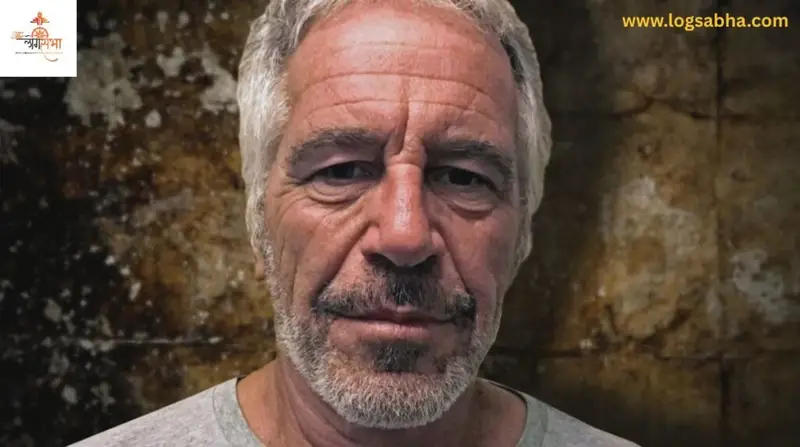
Jeffrey Epstein’s Final Failure: When the System Lost Its Credibility

Jeffrey Epstein’s Final Failure: When the System Lost Its Credibility

A man accused of some of the most heinous crimes in modern America died alone under government watch and the system’s explanation has never recovered its credibility. Jeffrey Epstein’s death did not ignite conspiracy theories; it exposed how deeply public trust in institutions had already eroded.

Wealth, Power, and the Machinery of Elite Impunity

The life of Jeffrey Edward Epstein is not merely the chronicle of a criminal individual; it is a disturbing case study of how wealth, access, and institutional deference can suspend accountability for years sometimes permanently. His rise from obscurity to the inner sanctums of global power, followed by his abrupt death in federal custody, exposes systemic failures that extend far beyond one man.

Epstein was not dangerous simply because he was predatory. He was dangerous because the structures around him financial, legal, political, and social repeatedly chose convenience, silence, and privilege over scrutiny and justice.

Humble Origins, Inflated Identity

Born in January 1953 in Brooklyn to a working-class family, Epstein’s early life bore no markers of future prominence. His parents held modest municipal jobs, and his upbringing was unremarkable by elite standards. Yet Epstein was intellectually sharp, particularly in mathematics and science, and this intelligence became his first lever.

He attended respected institutions but never completed a degree a fact he routinely obscured. This gap between reality and representation would become a lifelong pattern. Epstein learned early that confidence, ambiguity, and proximity to power could substitute for credentials.

Access Over Merit: The Dalton School Episode

In the early 1970s, Epstein secured a teaching position at Manhattan’s elite Dalton School despite lacking formal qualifications. The significance of this appointment was not pedagogical it was social. Dalton placed Epstein in direct contact with the families of Wall Street’s uppermost tier.

One connection proved decisive: Alan “Ace” Greenberg of Bear Stearns. That relationship propelled Epstein from obscurity into high finance, illustrating how elite networks often value association over verification.

Wall Street Rise and the Quiet Departure

In 1976, Epstein joined Bear Stearns and rose with remarkable speed. By 1980, he had become a limited partner, an achievement that suggested extraordinary competence or extraordinary patronage or both. His trading style was aggressive, his confidence unshakable.

Yet in 1981, Epstein exited Bear Stearns abruptly. The reasons were never fully explained, officially attributed to internal issues. No charges followed. What Epstein carried with him, however, was something invaluable: institutional legitimacy. In elite finance, credibility often outlives conduct.

The Cultivation of Mystery

Epstein’s post–Wall Street career was built not on transparency but on deliberate obscurity. Through entities like J. Epstein & Company, he claimed to manage wealth exclusively for billionaires an arrangement that conveniently eliminated public oversight.

He encouraged rumors of intelligence ties, international arms dealings, and unique financial strategies, rarely clarifying any of them. In rarefied circles, secrecy was mistaken for sophistication. Questions were discouraged; access was rewarded.

Subsequent investigations revealed that Epstein’s wealth was less the product of financial genius than of manipulation and control most notably over retail magnate Les Wexner, from whom Epstein extracted extraordinary financial authority. The illusion held because few dared to challenge it.

Luxury as Infrastructure

Epstein’s properties were not indulgences; they were instruments. His Manhattan mansion, private Caribbean island, luxury residences, and private jet formed a controlled ecosystem designed to exclude oversight.

These spaces were shielded by staff bound to silence, guests insulated by status, and victims isolated by fear and dependency. Wealth did not merely enable Epstein’s lifestyle, it structured his impunity.

A Systematic Pattern of Abuse

Behind the façade of finance and philanthropy, Epstein ran a long-term operation of sexual exploitation involving minors. Victims were often recruited from economically vulnerable backgrounds, promised money or opportunity, and gradually coerced into abuse.

The pattern was consistent and methodical: recruitment through intermediaries, normalization of exploitation, enforcement through payments and intimidation. The scale was vast, extending over years and across jurisdictions.

What was most alarming was not the existence of allegations, but their persistence without consequence.

The 2008 Plea Deal: Justice Deferred

In 2005, law enforcement in Florida amassed substantial evidence against Epstein. Yet in 2008, the case ended not in a full prosecution but in an extraordinary plea agreement that shielded Epstein from federal charges.

He served a minimal sentence under conditions so lenient they mocked the gravity of the crimes. The agreement insulated not only Epstein but potentially others, signaling a chilling message: wealth and influence could bend justice beyond recognition.

Arrest, Exposure, and an Unanswered Ending

In July 2019, federal authorities arrested Epstein on sex trafficking charges. For the first time, the legal system appeared poised to confront not just an individual but the network around him.

Weeks later, Epstein was found dead in his jail cell. Officially ruled a suicide, the circumstances malfunctioning cameras, inattentive guards, procedural lapses ensured that doubt would endure. For victims, his death did not bring closure; it foreclosed
accountability.

Aftermath Without Resolution

Epstein’s estate paid substantial settlements to victims. Financial institutions faced lawsuits for enabling suspicious transactions. Associates were drawn into public scrutiny. Yet the central reckoning how such a system functioned for decades remains incomplete.

Jeffrey Epstein’s story is not exceptional because it is rare. It is exceptional because it reveals how normalized elite impunity can become.

He thrived because institutions deferred to wealth, feared influence, and confused status with legitimacy. He survived because secrecy was rewarded and skepticism discouraged. His victims suffered because accountability was postponed until it no longer mattered.

This is the enduring lesson of Epstein’s life: when power operates without transparency, exploitation becomes invisible and justice arrives, if at all, far too late.

Building a Consulting Empire and Strategic Alliances (1980s–1990s)

After his sudden exit from Bear Stearns in 1981 officially explained as an internal separation amid unresolved questions over expenses and lending practices Jeffrey Epstein set about reconstructing his public identity. He founded Intercontinental Assets Group Inc., presenting it as a specialist firm that traced and recovered embezzled or concealed assets for banks, corporations, and, at times, government-linked clients. Operating in murky jurisdictions and complex financial terrains, the firm earned Epstein a reputation as a discreet “asset hunter,” commanding extraordinary fees for work few others claimed to do.

This niche accomplished more than revenue generation. It embedded Epstein within rarefied financial circles that prized secrecy as a feature, not a flaw. By the late 1980s, he leveraged these connections to recast himself yet again, this time as the head of an ultra-exclusive wealth advisory.

In 1987, Epstein launched J. Epstein & Company, later rebranded as the Financial Trust Company. The firm’s defining characteristic was its deliberate exclusivity: Epstein claimed he accepted only clients with a net worth exceeding $1 billion. Whether true or exaggerated, the claim functioned as a powerful shield reducing scrutiny while elevating prestige and reinforcing the illusion that Epstein operated beyond the reach of conventional finance.

A decisive inflection point came with his relationship with Les Wexner, founder of L Brands. Epstein secured Wexner’s extraordinary confidence, ultimately receiving sweeping authority over Wexner’s finances, real estate holdings, and philanthropy including power of attorney by the early 1990s. Such latitude is almost unheard of in elite wealth management and effectively allowed Epstein to act with minimal oversight.

Later investigations including a major exposé by The New York Times alleged that Epstein abused this trust on a massive scale. Rather than safeguarding assets, he was accused of diverting tens of millions of dollars through fabricated investment vehicles, unauthorized transfers, and opaque transactions. The portrait that emerged was not of a brilliant steward of capital, but of a systematic extractor of wealth operating behind a veil of legitimacy.

Epstein also cultivated relationships with other powerful financiers. Among them was Leon Black, co-founder of Apollo Global Management. Epstein reportedly advised Black on tax and estate matters for years, earning hundreds of millions of dollars in fees. These associations further entrenched Epstein within the uppermost tiers of global finance, even as the true sources of his fortune remained opaque.

By the late 1990s, Epstein shifted key operations offshore to the U.S. Virgin Islands, exploiting favorable tax regimes and lighter regulatory oversight. His financial architecture relied on layered trusts, shell entities, and complex legal arrangements that made tracing funds exceedingly difficult. Though Epstein publicly claimed to manage as much as $15
billion at his peak, subsequent scrutiny suggested these figures were inflated. In reality, his wealth appeared heavily dependent on a small circle of clients and aggressive offshore
strategies rather than broad-based investment success.

Peak Wealth and Questionable Ventures (1990s–2000s)

Throughout the 1990s and into the early 2000s, Epstein’s personal wealth expanded rapidly. He poured capital into high-profile real estate acquisitions that would later become synonymous with both his public image and his criminal conduct. These included the private Caribbean island of Little St. James, purchased in 1998, a vast ranch in New Mexico, and a lavish Manhattan townhouse.

Alongside real estate, Epstein ventured into hedge funds, speculative investments, and associations with modeling agencies endeavors that often appeared less driven by returns than by access, influence, and control. These pursuits further blurred the boundary between legitimate finance and personal indulgence, reinforcing an ecosystem built on opacity.

By the early 2000s, Epstein had achieved more than wealth; he had engineered insulation.
His financial empire was not a conventional business so much as a carefully layered construct designed to obscure money flows, deter oversight, and shield its architect from accountability conditions that would later prove not only revealing, but devastating.

The December 18, 2025 Epstein Photos Release: An Editorial Analysis

The release of 68 previously unseen photographs linked to Jeffrey Epstein on December 18, 2025 has once again pulled the curtain back on one of the most disturbing scandals of the modern era not because the images reveal new crimes, but because they reinforce how deeply Epstein embedded himself within elite social, intellectual, and political circles.

Made public a day ahead of the statutory deadline set under the Epstein Files Transparency Act (passed in November 2025), the photographs were released by Democratic members of the House Oversight Committee as part of a broader effort to counter allegations of institutional cover-ups and selective secrecy. Subpoenaed from Epstein’s estate and drawn from his computers and email archives, the images are heavily redacted and deliberately framed as a “representative sample” of a far larger cache reportedly exceeding 95,000 files.

The message behind the release is unmistakable: Epstein did not operate on the margins of power he moved comfortably within it.

What the Photos Show and What They Do Not

The images, undated and partially obscured, do not depict criminal acts. No individual shown is accused in these photographs of wrongdoing. Yet their significance lies elsewhere: in mapping the breadth of Epstein’s access and the deliberate cultivation of proximity to influence.

High-Profile Individuals Appearing in the Images

The released set includes photographs showing Epstein alongside well-known figures from technology, media, academia, and politics:

  • Bill Gates, photographed standing beside a woman whose face is redacted. Gates has previously acknowledged meeting Epstein regarding philanthropic discussions and has publicly expressed regret for those interactions.

  • Woody Allen, appearing in a casual setting with Epstein, highlighting the financier’s reach into cultural and entertainment circles.

  • Sergey Brin, included without contextual detail, underscoring how Epstein positioned himself among technology elites.

  • Noam Chomsky, shown seated with Epstein aboard an aircraft. Chomsky has stated the encounters were limited and related to financial discussions.

  • Steve Bannon, appearing in multiple images, some from angles not previously released, adding a political dimension to Epstein’s social network.

  • David Brooks, pictured in connection with a 2011 dinner. His employer has stated the event was a broadly attended research-related gathering, with no ongoing relationship.

The presence of such figures does not establish guilt. But it does reinforce a troubling pattern: Epstein deliberately surrounded himself with reputational shields individuals whose stature discouraged scrutiny and normalized his presence in elite spaces.

Disturbing Symbolism Within the Archive

Beyond social photographs, several items stand out for their unsettling symbolism:

  • Handwritten excerpts from Lolita Vladimir Nabokov’s novel centered on the sexual
    exploitation of a minor scrawled on an unidentified woman’s body, with a visible copy of the book nearby. The imagery is deeply disturbing, echoing themes central to Epstein’s crimes.

  • Foreign passports and visas belonging to women from Russia, Ukraine, Lithuania, the Czech Republic, and South Africa (all names redacted), suggesting the international dimensions of Epstein’s recruitment and movement networks.

  • Architectural plans for Epstein’s Caribbean properties, including Great St. James Island, marked with handwritten annotations visual reminders that these locations were meticulously designed, controlled environments.

  • A jail inmate request form from 2008, completed during Epstein’s Palm Beach incarceration, referencing global cities and signed with an intimate handwritten note an artifact hinting at how even imprisonment failed to sever his communications.

Individually, these materials may appear mundane or ambiguous. Collectively, they echo patterns already established through survivor testimony and prior litigation: control, secrecy, international reach, and psychological normalization of abuse.

Why This Release Matters

The December 18 release is significant not because it delivers a “smoking gun,” but because it reinforces structural truths that have long been evident:

Access Was Epstein’s Currency
Epstein did not need public authority; proximity to powerful people served the same function. The photos illustrate how influence itself became a form of protection.

Elite Proximity Does Not Equal Complicity, but It Enables Silence
Most individuals pictured deny wrongdoing, and no evidence in the images contradicts those denials. Yet the willingness of institutions to minimize or ignore Epstein’s presence for
decades reflects a broader culture of deference.

Transparency Remains Partial
Heavy redactions faces, names, contextual details are intended to protect privacy and
victims. But they also fuel public skepticism, especially given past failures by prosecutors, regulators, and financial institutions.

The Victims Remain Central, Even When Absent

While the photographs focus on Epstein’s social world, their true relevance lies in what that world allowed him to do. Every image is a reminder of the hundreds of survivors whose abuse occurred while Epstein moved freely among elites.

Conclusion: Images as Evidence of a System, Not a Trial

The December 18, 2025 Epstein photo release does not resolve the Epstein case. It does something more unsettling: it confirms that Epstein’s crimes were not hidden because they were invisible, but because powerful systems repeatedly chose not to look too closely.

These photographs are not proof of new crimes. They are proof of normalized proximity of how wealth, reputation, and access can dull institutional instincts that are meant to protect the vulnerable.

Until the full archive is responsibly examined and accountability extends beyond one dead man, the Epstein files will continue to raise the same uncomfortable question:

How many doors remained open to Jeffrey Epstein because no one wanted to be the one to close them?

The “Lolita Passport” Disclosures in the Epstein Files: Meaning, Context, and Limits

The phrase “Lolita passport” has entered public discourse following the December 18, 2025 release of photographs and documents connected to Jeffrey Epstein. It is not a legal or investigative term. Rather, it is a shorthand used by commentators to describe a troubling convergence within the newly unsealed materials: visual references to Vladimir Nabokov’s Lolita alongside images of foreign passports belonging to women whose identities have been deliberately redacted.

The release occurred under the Epstein Files Transparency Act, which compels the U.S. Department of Justice to make portions of its Epstein-related archive public. The 68 images disclosed drawn from Epstein’s estate do not present new allegations or proof of additional crimes. Their significance lies in what they reveal about Epstein’s psychology, his international reach, and the patterns that were already established in court records and survivor testimony.

1. Lolita References: Symbolism and Psychological Pattern

Several photographs show handwritten excerpts from Lolita inscribed on an unidentified woman’s body. The passages taken from the novel’s opening describe the narrator’s obsession with a pre-teen girl. Faces and identifying features are obscured, and in at least one image a physical copy of the book is visible nearby.

The inclusion of these references is disturbing but not evidentiary in a new legal sense. Lolita has long been associated with themes of grooming and sexual exploitation, and its appearance here reinforces a pattern described by survivors: Epstein’s tendency to intellectualize abuse and cloak predatory behavior in the language of culture and sophistication. He routinely hosted academics, cited literature, and projected an image of refinement that masked coercion and harm.

Importantly, the images do not implicate any third parties or document a specific criminal act. Their impact is contextual rather than prosecutorial they deepen understanding of Epstein’s mindset rather than expanding the list of charges.

2. The Passports: Indicators of an International Operation

The same batch includes photographs of passports and visas belonging to women, all heavily redacted. The documents appear to originate from several countries, including Russia, Ukraine, Lithuania, the Czech Republic, and South Africa. No names, ages, or destinations are visible.

On their own, passports prove nothing. In the context of Epstein’s case, however, they echo findings from earlier investigations showing that his trafficking network crossed borders and exploited immigration vulnerabilities. Survivors have testified that travel often arranged or controlled by Epstein was a mechanism of dependency and isolation, moving victims
between properties in the United States and abroad.

The informal phrase “Lolita passport” arises from the juxtaposition of these two elements: fetishized literary symbolism and evidence of international movement. It is a descriptive label, not a claim that the documents themselves are proof of underage trafficking or new crimes.

3. Context of the December 18 Release

The materials were subpoenaed from Epstein’s estate and form a small portion of a much larger archive held by federal authorities. The December 18 disclosure preceded a broader unsealing deadline and was presented by lawmakers as a step toward transparency after years of public frustration.

As with earlier document releases, the images include photographs of Epstein with prominent public figures. These appearances, standing alone, do not suggest criminal involvement, and no new accusations arise from them. Redactions were applied to protect victims and third parties, a measure that has simultaneously preserved privacy and fueled criticism about incomplete disclosure.

4. What the Materials Do and Do Not Show

Taken together, the “Lolita” images and the passports underscore several key points:

  • Pattern, not proof: The materials reinforce known behaviors and themes in Epstein’s case but do not introduce new charges, perpetrators, or criminal acts.

  • Symbolic weight: The imagery aligns with survivor accounts of grooming, control, and normalization of abuse within insulated, elite environments.

  • Transparency tension: Necessary redactions protect individuals but also sustain public suspicion, particularly given Epstein’s history of evading accountability.

Crucially, the release redirects attention away from speculation about secret “client lists” and toward documented institutional failures missed warnings, deferred action, and a prolonged absence of accountability.

Conclusion: Insight Without Closure

The convergence of Lolita references and foreign passports in the Epstein files is disturbing precisely because it fits an established pattern rather than exposing a hidden one. It adds
texture and confirmation to what courts and survivors have already shown, without delivering a dramatic new revelation.

If the “Lolita passport” discussion provokes outrage, it should be directed not at rumor or implication, but at the systemic lapses that allowed Epstein’s conduct to persist for decades. The enduring lesson of these disclosures is not about who appears in an image, but about how clear symbolic and substantive warnings were repeatedly ignored—and how justice, when delayed, becomes partial at best.

The Epstein Death: Suicide, Suspicion, and the Crisis of Institutional Credibility

Jeffrey Epstein’s death on August 10, 2019, inside a federal detention facility was officially ruled a suicide. Yet, years later, the case remains unresolved in the public consciousness. Not because credible evidence of murder has surfaced, but because the circumstances surrounding his death revealed such profound institutional failure that public confidence in official explanations collapsed almost instantly.

Epstein did not die as an ordinary inmate. He died while awaiting trial on federal sex- trafficking charges that threatened to expose a vast ecosystem of wealth, power, and silence. When an individual so deeply embedded in elite networks dies under government custody, skepticism is not accidental it is inevitable. In this case, trust became the first casualty.

The Official Conclusion and Why It Failed to Convince

The New York City medical examiner determined that Epstein died by suicide through hanging. Federal investigations conducted by the FBI and the Department of Justice found no evidence of homicide. Surveillance footage outside Epstein’s cell showed no unauthorized entry. Subsequent inquiries confirmed that correctional officers falsified logs, and institutional reviews documented widespread operational breakdowns at the facility.

Formally, the conclusion is clear.

Substantively, it was inadequate. Epstein had been removed from suicide watch despite known risks. His cellmate was transferred, leaving him alone. Guards failed to perform mandatory welfare checks. Surveillance cameras malfunctioned. Each safeguard designed to prevent exactly such an outcome failed in succession. In a typical case, this would be labeled gross negligence. In Epstein’s case, it produced something far more corrosive a collapse of credibility.

Why the Murder Narrative Endures

The persistence of murder theories is not rooted in proof, but in context.

Epstein’s earlier treatment by the justice system had already shattered public faith in equal accountability. His 2008 plea deal widely condemned for allowing him to avoid meaningful punishment despite overwhelming evidence of abuse established a perception that wealth and influence could override the law. When Epstein later died in federal custody, many did not see coincidence; they saw continuity.

Compounding this was Epstein’s proximity to political leaders, billionaires, royalty, and cultural elites. The belief that he “knew too much” gained traction not because it was verified, but because experience had taught the public that powerful systems often protect themselves first.

Medical disagreements over neck fractures routine within forensic science were magnified into symbols of concealment. Operational failures were interpreted not as incompetence, but as orchestration. In an age defined by institutional distrust, ambiguity itself became suspect.

Negligence Without Conspiracy But With Devastating Impact

The most uncomfortable truth is also the most plausible: Epstein likely died by suicide, but the state made it possible.

No elaborate conspiracy was required. Chronic understaffing, administrative dysfunction, exhaustion, and a culture that tolerated procedural shortcuts were sufficient. The federal system failed in its most basic duty to safeguard a detainee in its custody.

That failure carried irreversible consequences. Epstein’s death denied survivors the public reckoning of a trial. It deprived society of a full accounting of complicity and enablement. And it ensured that speculation would permanently replace closure.

The Larger Indictment

Ultimately, this case is not about how Epstein died. It is about why so few people believe the answer.

When transparency erodes, even verified facts sound hollow. When institutions protect themselves before the public interest, credibility dissolves. And when power repeatedly escapes consequence, official conclusions no matter how well supported lose their authority.

Jeffrey Epstein’s death stands as a stark warning. Justice delayed does not merely fail victims; it poisons public trust. Whether through negligence or indifference, the system ensured that one of the most consequential criminal trials in modern American history would never take place.

That failure not any unproven conspiracy is the enduring scandal.

Defenders, Enablers, and the Architecture of Denial: How Jeffrey Epstein Retained Protection

One of the most disturbing dimensions of the Jeffrey Epstein scandal is not confined to the crimes themselves, but to the sustained defense, tolerance, and normalization he received from influential individuals long after serious allegations—and even convictions—were on record. Epstein’s continued acceptance within elite circles reveals how wealth, proximity to power, and strategic silence can function as informal shields against accountability.

In this context, “support” does not mean approval of criminal acts. It refers instead to public defenses, continued social or financial association, legal advocacy, or efforts to minimize allegations at moments when clear moral separation was warranted. These actions, whether intentional or negligent, contributed to an ecosystem in which Epstein was able to operate with remarkable impunity.

Loyalty After Conviction: The Dubin Case

Among Epstein’s most prominent and persistent defenders were Glenn Dubin and Eva Dubin. Even after Epstein’s 2008 conviction for procuring a minor for prostitution, the Dubins maintained a close personal relationship with him an extraordinary decision given the
seriousness of the offense.

Eva Dubin later testified during the 2021 trial of Ghislaine Maxwell, stating that she had dated Epstein in the 1980s and had trusted him around her children. The couple continued to host and associate with Epstein socially, while professional ties to his circle remained intact. Their stance became emblematic of a broader phenomenon: the refusal of elite insiders to accept what the evidence increasingly made undeniable.

Royal Proximity and Public Minimization

Epstein’s relationship with Prince Andrew drew global attention precisely because it illustrated how privilege can blur accountability. Even after Epstein’s conviction, Prince Andrew continued to associate with him, including staying at Epstein’s residence following his release from custody.

When confronted publicly in a 2019 BBC interview, Andrew attempted to downplay the relationship, framing it as incidental rather than close. That interview, widely criticized for its tone and lack of remorse, further damaged public trust. Though Andrew later settled a civil lawsuit related to alleged abuse without admitting guilt, his initial reluctance to unequivocally denounce Epstein reinforced perceptions that elite status offers insulation unavailable to ordinary individuals.

Legal Defense as Public Rehabilitation

Epstein’s most articulate public defender was Alan Dershowitz, a member of Epstein’s legal team and a prominent academic voice. Dershowitz consistently defended the 2008 plea agreement as reasonable and portrayed Epstein as the target of exaggerated or politically motivated accusations.

Through opinion pieces and interviews, Dershowitz emphasized Epstein’s intellect and philanthropic engagement, reframing the narrative away from victims and toward procedural arguments. While Dershowitz denied allegations later raised against him and ultimately resolved them in civil court his public advocacy played a significant role in legitimizing Epstein’s continued presence in elite circles.

Political Circles and Strategic Distance

Epstein’s reach extended across political divides. Donald Trump publicly praised Epstein in a 2002 interview, though he later distanced himself after Epstein’s legal troubles resurfaced. Still, figures within Trump-aligned circles including Steve Bannon were later shown, through document releases in 2025, to have met Epstein multiple times and spoken favorably of his intellect.

On the Democratic side, Bill Clinton traveled aboard Epstein’s private jet on several occasions. Clinton has denied any knowledge of wrongdoing and stated that contact ceased years before Epstein’s arrest. Nevertheless, critics note that many within Epstein’s political orbit were slow to issue forceful condemnations, reinforcing a perception of selective
accountability.

Why the Defenses Persisted

The continued defense of Epstein cannot be attributed to a single motive. His philanthropic donations particularly to academic institutions his cultivated image as a financial savant, and his personal charm all contributed to a reluctance to confront uncomfortable truths. For many associates, acknowledging the reality of Epstein’s crimes would have required confronting their own judgment, silence, or complicity.

In retrospect, these defenses appear less as misunderstandings and more as a collective failure to prioritize victims over reputation.

Opening the Epstein Files: Pressure Without Mass Protest

Unlike other accountability movements that erupted into widespread street protests, the demand to unseal Epstein-related records unfolded through institutional channels legislation, survivor testimony, digital advocacy, and sustained media scrutiny. The absence of mass demonstrations did not reflect apathy, but rather a shift in how accountability is pursued in the digital and legislative age.

The Epstein Files Transparency Act (2025)

In 2025, bipartisan lawmakers including Tim Burchett and Marsha Blackburn led efforts to pass the Epstein Files Transparency Act. The law mandated the Department of Justice to unseal investigative materials related to Epstein by December 19, 2025.

The Act passed with overwhelming support and was signed into law, reflecting rare bipartisan consensus driven by public distrust and the demand for disclosure.

Digital Pressure and Media Amplification

Public engagement was largely digital. Online petitions, sustained social media campaigns, and amplification by influential commentators kept pressure on lawmakers and federal agencies. While only small demonstrations occurred outside government buildings, the digital campaign proved effective in maintaining attention and urgency.

Survivors at the Center of Disclosure

Survivors played a decisive role in driving transparency. Virginia Giuffre and others testified before congressional committees in 2025, demanding full disclosure of records that could expose enablers and institutional failures. Lawmakers such as Raja Krishnamoorthi
emphasized survivor testimony as the moral foundation of the release process.

Partial Disclosure and Renewed Skepticism

Initial releases including photographs made public on December 18 were seen as progress, but extensive redactions and missing materials reignited public suspicion. Lawmakers like Jamie Raskin accused federal agencies of withholding information, fueling renewed debate over transparency and accountability.

Conclusion: Accountability Delayed, Trust Damaged

The Epstein case stands as a stark illustration of how power, prestige, and institutional reluctance can delay accountability even in the face of mounting evidence. Those who defended, minimized, or quietly tolerated Epstein whether through loyalty, legal argument, or strategic silence helped sustain an illusion of legitimacy that allowed harm to continue.

The effort to unseal Epstein’s files is not about spectacle or vengeance; it is about truth. While mass protests never materialized, the persistence of survivors, journalists, and lawmakers forced incremental transparency. Yet partial disclosure has only deepened public skepticism.

What remains unresolved is not public interest, but institutional courage. Until full transparency is achieved, Epstein’s legacy will continue to symbolize not only individual criminality, but a systemic failure to confront it before irreparable damage was done.

A Man Made by the System, Destroyed by It

Jeffrey Epstein did not emerge from nowhere. He was not born into power he was constructed by it. From a modest background, Epstein climbed by exploiting the very architecture of elite privilege: secrecy, access, and institutional indulgence. He learned how the system works because the system welcomed him, protected him, and rewarded him. By the time he was arrested in 2019, Epstein was not an outsider abusing power—he was a product of it.

And when that product became dangerous to its creators, the system failed him in the most final way imaginable.

Whether by direct action or catastrophic negligence, the United States government allowed Epstein to die in its custody. A man facing the most explosive trial of the century one that threatened to expose political leaders, billionaires, financial institutions, and intelligence- adjacent networks was left alone, unwatched, unprotected, and unseen. Cameras failed.

Guards slept. Logs were falsified. Safeguards vanished. This was not the treatment of an ordinary inmate; it was the collapse of responsibility around an extraordinary one.

The government insists this was suicide. Perhaps it was. But when the state strips away every layer of protection from a high-risk detainee and then asks the public to accept the outcome without question, it forfeits the right to moral certainty. In that moment, intent becomes less important than consequence. Epstein did not simply die—he was removed from the legal process.

If justice had been the priority, Epstein would have lived to stand trial. If truth had mattered, he would have been guarded with relentless vigilance. Instead, the system that enabled his rise also ensured his silence. Not through transparency. Not through accountability. But through failure so total that it looks indistinguishable from design.

Epstein became powerful by mastering institutional blindness. He died because that blindness turned inward. And whether history calls it murder or monumental negligence, the verdict remains the same: the government failed its duty, the victims lost their
reckoning, and the truth was buried alongside the man who carried it.

That is not conspiracy. That is institutional guilt.

Leave a Comment

Your email address will not be published. Required fields are marked *

Scroll to Top