
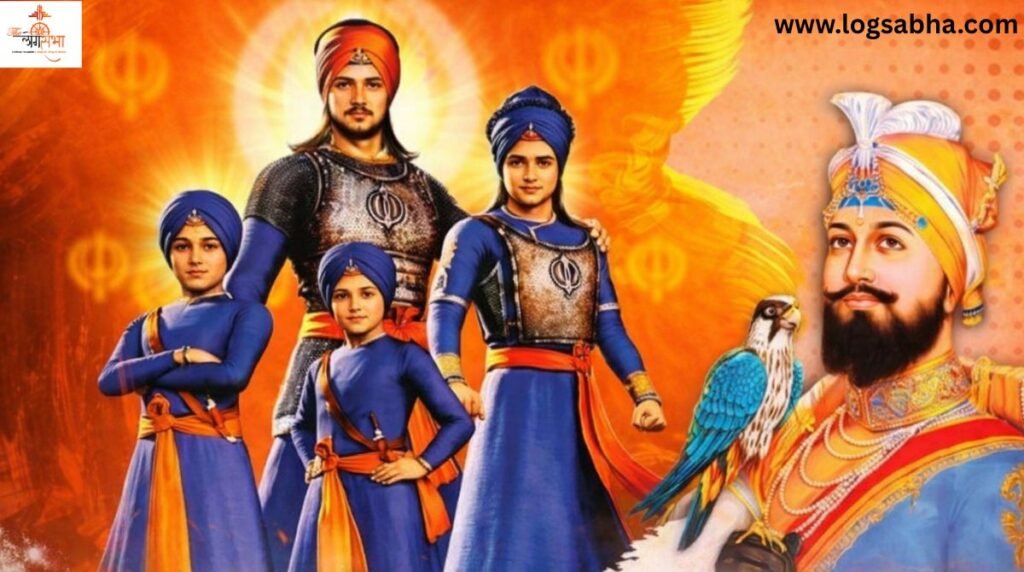
History rarely pauses to honour children, but on Veer Baal Diwas, it must. Because when empires relied on terror and coercion, four Sahibzadas answered not with fear, but with faith. Their sacrifice was not an accident of history; it was a conscious stand that exposed the moral fragility of power built on force. Remembering them is not an act of ritual—it is an act of conscience.
Veer Baal Diwas, observed each year on 26 December, marks one of the most profound moments in India’s moral and spiritual history. It commemorates the sacrifice of the four Sahibzadas—the sons of Guru Gobind Singh Ji—whose lives and deaths redefine the very meaning of courage. Instituted in 2022, the day is not merely a historical observance; it is a call to reflect on faith, resistance, and moral clarity demonstrated by children who stood unflinching in the face of terror.
The Winter of 1705: A Test of Conscience
The origins of Veer Baal Diwas lie in the intense persecution faced by the Sikh community in the early eighteenth century. In 1705, Guru Gobind Singh Ji and his family were pursued and separated amid relentless conflict.
Battle of Chamkaur (22 December 1705):
The elder sons, Baba Ajit Singh (18) and Baba Jujhar Singh (14), chose to face overwhelming forces on the battlefield. Their martyrdom embodied the Khalsa ideal—duty above life, righteousness above fear.
Sirhind (26 December 1705):
The younger Sahibzadas, Baba Zorawar Singh (6) and Baba Fateh Singh (9), were captured and brought before the Mughal governor, Wazir Khan. Offered life in exchange for renouncing their faith, they refused. They were bricked alive—an act of cruelty that stunned even their contemporaries. Their grandmother, Mata Gujri, succumbed soon after, unable to bear the weight of the loss.
These events endure in Sikh tradition as the ultimate assertion of dharma: choosing truth and conviction over survival itself.
Why Veer Baal Diwas Matters
Veer Baal Diwas does more than honor martyrdom; it reframes heroism for every generation.
-
Courage Without Compromise: The Sahibzadas showed that moral strength is not measured by age, arms, or authority.
-
Freedom of Belief: Their sacrifice stands as a timeless rejection of forced conversion and religious coercion.
-
Shared National Memory: By recognizing this chapter, India affirms Sikh history as inseparable from the nation’s collective conscience.
-
Inspiration for the Young: The day speaks directly to children and youth, reminding them that integrity and fearlessness are choices available at any age.
How the Nation Observes
Across the country, Veer Baal Diwas is marked through reflection and learning rather than spectacle.
-
Educational Spaces: Schools and colleges host storytelling sessions, discussions, exhibitions, and dramatizations that bring the Sahibzadas’ lives into the present.
-
Community Observances: Gurdwaras organize prayers, kirtans, and langars, creating spaces for collective remembrance.
-
Public Engagement: Awareness initiatives and addresses underline the relevance of these sacrifices in confronting intolerance and injustice today.
Contemporary Relevance
In an era defined by polarization, impatience, and selective memory, Veer Baal Diwas serves as both preservation and instruction. It places values—truth, courage, and service—at the heart of civic life. Beyond debates about how history is commemorated, the enduring message is unmistakable: moral courage does not age, and resistance to injustice begins with conviction.
Veer Baal Diwas honors more than the memory of four children—it honors the sovereignty of conscience. The Sahibzadas remind the nation that even when power is brutal and choices are cruelly narrowed, dignity can prevail. Their legacy offers a lasting lesson to every generation: courage does not wait for adulthood, and truth does not need permission to stand tall.
The Four Sahibzadas: Four Lives, One Unbreakable Resolve
The legacy of the four Sahibzadas—Baba Ajit Singh, Baba Jujhar Singh, Baba Zorawar Singh, and Baba Fateh Singh—is not simply a chapter of Sikh history; it is a moral compass for humanity. As the sons of Guru Gobind Singh, they were born into an age where faith invited violence and truth demanded sacrifice. Each Sahibzada responded to that age differently, yet all chose the same path: dignity without compromise.
Baba Ajit Singh (1687–1705): Leadership Defined by Sacrifice
Baba Ajit Singh, the eldest Sahibzada, embodied leadership not as command, but as responsibility. Born in Paonta Sahib, he matured amid constant conflict, trained early in warfare, discipline, and Sikh ethics. Initiated into the Khalsa, he internalised the principle that authority must be earned through example.
At the Battle of Chamkaur Sahib in December 1705, the Sikh forces faced annihilation. Baba Ajit Singh did not wait to be instructed—he volunteered. Leading a small band against an overwhelmingly large Mughal force, he fought until he fell at the age of eighteen. His martyrdom was not impulsive heroism; it was deliberate duty. By laying down his life, he ensured the continuation of the Sikh resistance and redefined leadership as self-sacrifice rather than survival.
Baba Jujhar Singh (1691–1705): Fearless Faith Without Calculation
Born in Anandpur Sahib, Baba Jujhar Singh grew up in the shadow of siege and struggle, trained rigorously in both arms and spirit. Though younger, he shared his brother’s clarity of purpose. Initiated into the Khalsa while still a child, he demonstrated composure beyond his years.
At Chamkaur, after witnessing Baba Ajit Singh’s martyrdom, the fourteen-year-old did not retreat into grief. He asked for permission to fight—not out of rage, but conviction. Entering the battlefield knowing the outcome, Baba Jujhar Singh fought with resolute courage until he too was martyred. His life affirmed a central Sikh truth: faith is not measured by age, but by readiness to uphold righteousness.
Baba Zorawar Singh (1696–1705): Steadfastness in Captivity
Baba Zorawar Singh’s courage was tested not on the battlefield, but in confinement. Born in Anandpur Sahib, he was raised in a deeply spiritual environment, grounded in prayer, humility, and moral discipline. During the evacuation of Anandpur, he was separated from his family and captured.
Brought before Wazir Khan, Baba Zorawar Singh faced offers of wealth, comfort, and safety in exchange for abandoning his faith. He refused calmly, firmly, without fear. At just nine years old, he demonstrated that faith does not weaken under threat. His stand revealed a profound truth: captivity can restrain the body, but never the conscience.
Baba Fateh Singh (1699–1705): Innocence That Would Not Bow
The youngest Sahibzada, Baba Fateh Singh, was only six years old when he faced the same trial. Born in Anandpur Sahib, his short life unfolded entirely in the presence of struggle. Yet even at such a tender age, he stood unwavering beside his elder brother.
When ordered to renounce Sikhism, Baba Fateh Singh refused without hesitation or confusion. On 26 December 1705, he was bricked alive alongside Baba Zorawar Singh. This act of cruelty was meant to terrorize a community into submission. Instead, it exposed the moral emptiness of tyranny. Their grandmother, Mata Gujri, would pass away soon after, overcome by grief.
Collective Legacy: Four Paths, One Truth
Each Sahibzada faced a different test—battlefield leadership, fearless action, captivity, and coercion. Yet all arrived at the same conclusion: truth is non-negotiable. Their martyrdom distilled the essence of Sikh values—courage, sacrifice, and unwavering faith.
Today, their memory lives on at sacred sites like Chamkaur Sahib and Fatehgarh Sahib, and through Veer Baal Diwas, observed nationally since 2022. Their lives speak across centuries, reminding the world that heroism is not defined by power, age, or victory but by moral clarity when everything is at risk.
Their question to humanity endures, answered by their own lives:
If faith, dignity, and truth are threatened—will you stand, even when standing costs everything?
Lesser-Known Dimensions of Veer Baal Diwas
Observed each year on 26 December, Veer Baal Diwas commemorates the extraordinary courage of the four Sahibzadas—the sons of Guru Gobind Singh—whose brief lives and supreme sacrifices shaped the moral conscience of Sikh history. While the broad narrative of their martyrdom is widely remembered, the deeper layers of this observance are less often explored. Together, these dimensions reveal why Veer Baal Diwas is not merely an act of remembrance, but a civilizational statement on faith, dignity, and resistance to injustice.
1. A Date Rooted in History, Not Convenience
Veer Baal Diwas is anchored to a precise historical moment rather than symbolic approximation. On 26 December 1705, the younger Sahibzadas Baba Zorawar Singh (9) and Baba Fateh Singh (6) were executed at Sirhind after refusing to abandon their faith. Fixing the observance to this exact date grounds remembrance in fact, reinforcing historical accountability over abstraction.
2. Mata Gujri: The Moral Anchor in Captivity
Often overshadowed by the martyrdom of the children is the quiet, resolute strength of their grandmother, Mata Gujri. During captivity, she steadied the boys and affirmed their resolve. She passed away shortly after their execution, overcome by grief. Veer Baal Diwas implicitly honours her role, reminding us that courage is cultivated through guidance, not inherited by chance.
3. A Deliberate Moment of Declaration
The national observance was formally announced in January 2022 on the Prakash Purab (birth anniversary) of Guru Gobind Singh Ji. This timing was intentional. It linked the Sahibzadas’ sacrifice directly to the Guru’s larger vision of the Khalsa—equality, moral courage, and resistance to oppression—placing their lives within a continuous ethical tradition.
4. The Elder Sahibzadas and the Complete Story of Valor
Public memory often centres on the younger brothers because of the brutality of their execution. Yet Veer Baal Diwas also recalls the heroism of the elder Sahibzadas Baba Ajit Singh (18) and Baba Jujhar Singh (14). At the Battle of Chamkaur (22 December 1705), both charged into an overwhelmingly larger Mughal force, fully aware of the cost. Their sacrifice affirms that courage defined the family’s ethos across ages.
5. A Global Moral Link Through the Zafarnama
Guru Gobind Singh’s Zafarnama—a powerful moral indictment of tyranny written in the aftermath of these events—is included in UNESCO’s Memory of the World Register. This recognition elevates Veer Baal Diwas beyond national memory, situating it within a global heritage of conscience, justice, and principled dissent.
6. Learning Beyond Textbooks
Since 2022, Veer Baal Diwas has been integrated into school activities through debates, plays, and storytelling. Alongside this, several gurdwaras and institutions have adopted immersive approaches—interactive narration and digital recreations—to help children experience history emotionally rather than merely recite it. Remembrance becomes lived, not ritualized.
7. A Diaspora Observance with Contemporary Meaning
Though officially observed in India, Veer Baal Diwas resonates strongly across Sikh communities worldwide. In Canada, the United Kingdom, and the United States, youth programs connect the Sahibzadas’ courage to present-day challenges such as bullying, discrimination, and freedom of conscience—demonstrating the adaptability and relevance of their legacy.
8. Parallels with Global Movements of Dignity
An underexplored parallel exists between the Sahibzadas’ stand for faith and other global struggles for identity and dignity, such as the 1952 Language Movement in Bangladesh, which later inspired International Mother Language Day. Both narratives assert that cultural and moral identity are worth defending, regardless of personal cost.
9. Art as a Carrier of Moral Memory
The martyrdom of the Sahibzadas inspired generations of Sikh artists. Nineteenth-century paintings often portrayed them with halos, signifying moral transcendence. This visual language continues today in books, illustrations, and children’s media—ensuring that memory survives through imagination as well as record.
10. An Expanding Tribute to Women’s Moral Leadership
While named after the Sahibzadas, many contemporary observances now consciously foreground Mata Gujri’s example, using Veer Baal Diwas to discuss women’s leadership, resilience, and ethical strength in times of crisis. This broadened interpretation reflects the inclusive spirit at the heart of Sikh tradition.
Conclusion
Veer Baal Diwas is far more than a remembrance of four children. It is a meditation on how societies confront injustice, how faith withstands coercion, and how courage can exist without age or power. These lesser-known dimensions remind us that history is not only about what happened, but about what continues to matter.
When conscience is clear, even the youngest can stand taller than empires.